


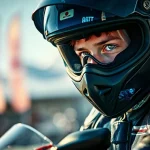





The Future of MotoGP Over the Next Ten Years: A New Era Begins
MotoGP stands at a pivotal moment as legendary riders approach retirement while extraordinary young talents emerge. With 2025 grid statistics showing an average rider age of just 26.4 years according to official MotoGP data, the championship is witnessing its most generational shift in decades. Will rising stars like Pedro Acosta and David Alonso redefine what we expect from premier class racing? Access the full article here.
Pedro Acosta: Spain’s Next Championship Contender
Pedro Acosta’s trajectory through the championship ranks reads like a masterclass in rapid development. The 20-year-old Spaniard announced himself with authority by claiming the Moto3 world title as a rookie in 2021, then followed up with an equally impressive Moto2 championship in 2023. His seamless transition between categories showcases the rare combination of raw speed and tactical maturity that defines championship-caliber riders.
Topic to read : Mastering Digital Transformation in UK Healthcare: An Essential Strategy Blueprint for Success
What sets Acosta apart from his peers is his fearless riding style combined with exceptional racecraft intelligence. During his debut MotoGP season with Tech3 KTM, he consistently outperformed seasoned veterans, securing multiple podium finishes and demonstrating an uncanny ability to extract maximum performance from machinery others struggled to tame. His aggressive yet calculated approach mirrors the legendary Spanish riders who preceded him.
Technical analysis reveals Acosta’s unique strength lies in his corner entry techniques and late-braking capabilities, allowing him to make decisive moves when championship points are at stake. With Spain’s MotoGP legacy spanning from Àlex Crivillé to current stars like Marc Márquez, Acosta represents the natural evolution of this winning tradition, positioning himself as the heir apparent to Spain’s grand prix throne.
Also to discover : Achieve quran mastery independently through professional support
The Asian Revolution: How Eastern Riders Are Reshaping Premier Class Racing
The landscape of MotoGP is witnessing a seismic shift as Asian talent emerges from traditionally overlooked markets. Japan’s resurgence through riders like Ai Ogura, combined with breakthrough performances from Malaysian sensation Khairul Idham Pawi and India’s promising prospects, signals a fundamental change in the championship’s geographical dynamics.
This Asian influx extends beyond individual success stories. Japanese manufacturers Honda and Yamaha are strategically investing in regional development programs, recognizing that homegrown talent creates deeper market penetration across Southeast Asian territories. The ripple effect influences everything from sponsorship strategies to broadcast scheduling, with races now timed to maximize Asian viewership.
The technical approach these riders bring differs markedly from their European counterparts. Raised on different racing philosophies and motorcycle cultures, Asian competitors often demonstrate exceptional smoothness and precision under pressure. Their riding styles complement the evolving technical regulations, particularly as MotoGP moves toward more electronics-dependent machinery.
For manufacturers, this demographic shift represents both opportunity and challenge. Constructor strategies must now account for diverse riding preferences while expanding their development programs across multiple continents to nurture the next generation of premier class contenders.
Key Rising Stars to Monitor in the Coming Decade
The MotoGP grid is experiencing a generational shift as young talents from Moto2 and Moto3 prepare to reshape the premier class. These riders bring fresh perspectives, advanced technical understanding, and an aggressive racing style that promises to define the sport’s future.
- Pedro Acosta – The Spanish phenomenon has already proven his MotoGP credentials with multiple podium finishes in his rookie season. His aggressive overtaking style and exceptional wet-weather skills make him a future championship contender.
- Ai Ogura – The Japanese rider’s methodical approach and consistent speed in Moto2 suggest he’ll adapt well to MotoGP’s demands. His technical feedback and development skills could prove invaluable for manufacturer partnerships.
- Fermín Aldeguer – Another Spanish talent combining raw speed with tactical intelligence. His ability to manage tire degradation and race strategy positions him as a potential dark horse candidate for future success.
- Izan Guevara – The former Moto3 champion’s fearless racing style and natural talent for finding grip in challenging conditions make him one of the most exciting prospects currently climbing through the categories.
Technical Evolution and Its Impact on Rider Development
The modern MotoGP landscape demands a fundamentally different skill set than previous generations required. Advanced aerodynamics have transformed cornering dynamics, requiring riders to master completely new braking points and racing lines that seemed impossible just five years ago.
Electronic systems now handle millisecond-level decisions that riders previously managed through pure instinct. Traction control, wheelie control, and engine mapping create a partnership between human reflexes and artificial intelligence. Young talents like Pedro Acosta demonstrate remarkable adaptability to these systems, treating them as natural extensions rather than foreign intrusions.
Sustainable fuel regulations are reshaping power delivery characteristics across the rev range. Riders must now optimize their technique around energy management strategies while maintaining competitive lap times. This evolution particularly favors analytically-minded pilots who can process complex data streams during races.
The generational divide becomes evident in adaptation speed. Veteran champions often struggle to unlearn decades of muscle memory, while emerging riders embrace these technologies as fundamental racing tools. This technological shift accelerates the natural progression of fresh talent into championship contention, creating unprecedented opportunities for rapid career advancement.
Factory Team Strategies for Nurturing Tomorrow’s Champions
Manufacturers have understood that the future of MotoGP is being shaped by their academies and development programs. Ducati is leading this revolution with its Riders’ Academy, where every promising talent benefits from personalized support from their very first steps in competition. This methodical approach allows the Italian manufacturer to maintain a steady pipeline of future champions.
Honda and Yamaha have also restructured their training strategies. The Japanese manufacturer focuses on close partnerships with satellite teams, offering young riders privileged access to cutting-edge technologies while preserving their gradual development. Yamaha complements this approach with massive investments in technical training, preparing its protégés for the increasing demands of the premier class.
KTM represents the perfect example of a long-term vision. Their Red Bull Rookies Cup is a true talent identification laboratory, where every performance is analyzed to uncover future prodigies. This patient investment strategy is beginning to bear fruit with the emergence of riders like Pedro Acosta.
What This Means for MotoGP’s Global Appeal
This emerging generation of riders represents a golden opportunity for MotoGP to expand its global footprint beyond traditional European strongholds. Pedro Acosta’s meteoric rise has already ignited unprecedented enthusiasm in Spain, while Asian talents like Ai Ogura are creating new pathways for engagement across Japan and Southeast Asia.
The technical diversity these riders bring translates into more unpredictable races and compelling storylines that resonate with different cultural audiences. When fans see riders who share their nationality or background achieving success, it creates deeper emotional connections that drive viewership and merchandise sales in previously untapped markets.
Manufacturers are taking notice too. The success of riders from emerging markets opens doors for strategic partnerships and sponsorship opportunities that can significantly boost MotoGP’s commercial appeal. This geographical expansion isn’t just about numbers—it’s about creating a truly global championship where talent transcends borders and tradition.
Your Questions About MotoGP’s Rising Stars
Who are the rising stars in MotoGP right now?
Pedro Acosta leads the charge alongside Fabio Di Giannantonio and Jorge Martin. These riders consistently deliver competitive performances while demonstrating the technical prowess needed for championship contention in modern MotoGP.
Which young riders will dominate MotoGP in the future?
Acosta’s exceptional adaptability positions him as the frontrunner, with Ai Ogura and Celestino Vietti showing promise from Moto2. Their combined technical skills suggest a generational shift in racing dynamics.
What will happen to MotoGP when Marquez and Quartararo retire?
The grid will witness a power vacuum that emerging talents like Acosta and Martin are already positioning to fill, creating opportunities for a new competitive hierarchy.
Who is Pedro Acosta and why is he considered the next big thing?
The Spanish rider’s rapid progression from Moto3 champion to MotoGP contender showcases exceptional racecraft and adaptability, earning comparisons to legendary riders for his technical precision.
How are Asian riders changing the landscape of MotoGP?
Riders like Ai Ogura represent growing Asian representation, bringing diverse riding styles and technical approaches that challenge traditional European dominance in premier class racing.
How does our publication analyze emerging MotoGP talent?
We combine performance data analysis with insider access across all categories, tracking rider development from Moto3 through MotoGP to provide comprehensive talent assessments and career projections.